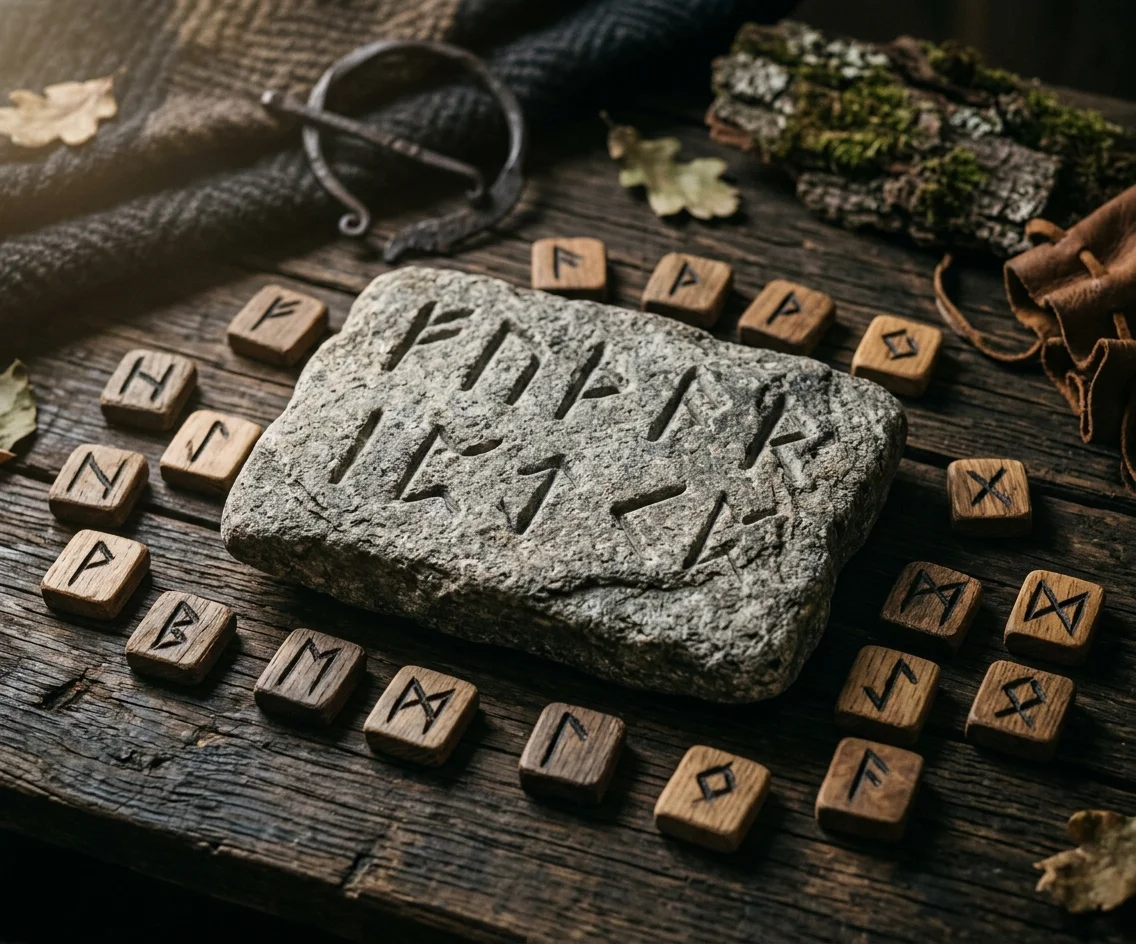
Runes are more than mysterious marks carved into stone, wood, or metal. The Elder Futhark contains 24 characters, each connected with a name, sound, history, and traditional symbolism.
Today, people explore rune meanings for history, mythology, spirituality, reflection, and creative practice. This guide explains all 24 Elder Futhark runes clearly, while separating historical evidence from modern interpretations.
What Is the Elder Futhark?
The Elder Futhark is the earliest widely recognized runic alphabet, consisting of 24 characters. Its name comes from the first six rune names: F, U, Þ, A, R, and K.
It was used among Germanic-speaking communities during the early centuries of the Common Era. Later runic systems developed from it, including the Younger Futhark used during the Viking Age.
The 24 Elder Futhark Runes at a Glance
The Elder Futhark contains 24 runes traditionally arranged into three groups called ættir. Each rune has a name and sound, while modern readers often associate additional symbolic ideas with each character.
| Rune | Name | Common symbolic association |
|---|---|---|
| ᚠ | Fehu | Wealth |
| ᚢ | Uruz | Strength |
| ᚦ | Thurisaz | Defense |
| ᚨ | Ansuz | Communication |
| ᚱ | Raidho | Journey |
| ᚲ | Kenaz | Knowledge |
| ᚷ | Gebo | Gift |
| ᚹ | Wunjo | Joy |
| ᚺ | Hagalaz | Disruption |
| ᚾ | Nauthiz | Need |
| ᛁ | Isa | Stillness |
| ᛃ | Jera | Harvest |
| ᛇ | Eihwaz | Transformation |
| ᛈ | Perthro | Mystery |
| ᛉ | Algiz | Protection |
| ᛋ | Sowilo | Victory |
| ᛏ | Tiwaz | Justice |
| ᛒ | Berkana | Growth |
| ᛖ | Ehwaz | Movement |
| ᛗ | Mannaz | Humanity |
| ᛚ | Laguz | Water |
| ᛜ | Inguz | Potential |
| ᛟ | Othala | Heritage |
| ᛞ | Dagaz | Awakening |
Fehu: Wealth and Abundance
Fehu is the first Elder Futhark rune and is traditionally associated with cattle or livestock. Because livestock represented valuable movable wealth in early Germanic societies, the rune became linked with prosperity and resources.
Modern rune meanings often connect Fehu with abundance, success, security, fertility, and material gain. Its broader theme is having valuable resources and using them wisely rather than simply collecting possessions.
Fehu Symbolism
Fehu can represent earned wealth, productive resources, generosity, and financial movement. In modern spiritual practice, it may encourage people to recognize opportunities while remembering that prosperity also carries responsibility.
Uruz: Strength and Potential
Uruz is traditionally associated with the aurochs, a powerful wild cattle species that is now extinct. The animal’s strength and untamed nature provide the foundation for the rune’s traditional symbolic associations.
Its themes include physical strength, courage, endurance, freedom, and raw potential. Uruz can therefore suggest resilience and the ability to develop strength through difficult circumstances and personal challenges.
Uruz Symbolism
Uruz is commonly connected with courage, vitality, determination, and transformation. Its imagery reminds readers that natural strength can be powerful, but controlling and directing that strength is equally important.
Thurisaz: Defense and Conflict
Thurisaz is traditionally connected with a thorn and may also relate linguistically to giants or Þurs figures in Germanic tradition. Its sharp imagery naturally suggests danger, resistance, and defensive force.
Modern interpretations commonly associate Thurisaz with protection, conflict, reaction, catharsis, and regeneration. Rather than representing simple aggression, it can symbolize responding carefully when boundaries, safety, or important values are challenged.
Thurisaz Symbolism
Thurisaz often represents a force that interrupts complacency. Its symbolism can encourage caution, self-protection, and thoughtful responses before acting during tense or uncertain situations.
Ansuz: Communication and Inspiration
Ansuz is associated with communication, speech, and divine or ancestral associations in later rune traditions. Its name is connected with the Old Germanic concept of an Æsir or divine being.
Modern interpretations frequently connect Ansuz with communication, understanding, wisdom, inspiration, and expression. The rune can therefore represent the importance of listening carefully and choosing words with purpose.
Ansuz Symbolism
Ansuz is often viewed as a rune of messages, language, learning, and insight. It can symbolize receiving useful information, communicating clearly, or recognizing meaning hidden within an important conversation.
Raidho: Travel and Movement
Raidho is associated with riding or a journey. Its name and historical linguistic connections relate to travel and movement, making the image of a wagon or journey especially useful when discussing its traditional associations.
Modern interpretations expand this theme toward rhythm, progress, decisions, evolution, and personal journeys. Raidho can represent movement with direction rather than wandering without purpose.
Raidho Symbolism
Raidho may symbolize physical travel, personal development, timing, balance, and purposeful movement. Its central idea is not simply going somewhere, but understanding how each stage contributes to the journey.
Kenaz: Knowledge and Creativity
Kenaz is commonly associated with a torch in modern presentations of the Elder Futhark. Light provides a useful symbolic image because it makes hidden things visible and allows people to understand what was previously unclear.
Modern interpretations connect Kenaz with knowledge, creativity, vision, inspiration, improvement, and vitality. It can represent learning something new and using that knowledge to create meaningful change.
Kenaz Symbolism
Kenaz often represents illumination and discovery. It can symbolize creative energy, practical understanding, teaching, artistic expression, or the moment when a difficult idea suddenly becomes clear.
Gebo: Gifts and Partnership
Gebo is traditionally associated with a gift. Giving and receiving were important social practices in Germanic societies, where relationships could be strengthened through reciprocal generosity and obligation.
Modern interpretations connect Gebo with exchange, balance, generosity, partnership, and relationships. Its symbolism highlights reciprocity: healthy connections often depend on both people contributing, receiving, respecting, and supporting one another.
Gebo Symbolism
Gebo can represent generosity, cooperation, friendship, and balanced relationships. It is especially useful as a symbol of mutual exchange because a meaningful gift can create or strengthen social bonds.
Wunjo: Joy and Harmony
Wunjo is commonly associated with joy, pleasure, comfort, and harmony. Its position near the end of the first ætt also makes it a frequent symbol of positive resolution within modern rune traditions.
Modern interpretations connect Wunjo with happiness, prosperity, reward, comfort, and success. It can represent the satisfaction that comes when effort, relationships, and circumstances finally come together peacefully.
Wunjo Symbolism
Wunjo may symbolize emotional satisfaction, belonging, friendship, harmony, and celebration. Its message can be understood as appreciating genuine happiness instead of measuring success only through material achievements.
Read More: 100 Idioms: Meanings & Examples
Hagalaz: Disruption and Change
Hagalaz is associated with hail, a natural force capable of damaging crops and disrupting ordinary life. The imagery makes the rune particularly suitable for discussing sudden events beyond human control.
Modern interpretations often connect Hagalaz with disruption, challenges, nature, testing, and overcoming obstacles. Rather than promising comfort, it represents the difficult periods that can force adaptation and eventually produce change.
Hagalaz Symbolism
Hagalaz can symbolize unexpected disruption and the need to adapt. Its imagery reminds us that not every change is planned, yet difficult circumstances can reveal resilience and create opportunities for rebuilding.
Nauthiz: Need and Endurance
Nauthiz is associated with need or necessity. The concept points toward situations involving limitation, pressure, or unmet requirements, making it one of the more challenging runes in modern symbolic interpretations.
Its themes include restriction, conflict, endurance, willpower, and self-reliance. Nauthiz can represent learning how to work within limitations instead of wasting energy wishing circumstances were different.
Nauthiz Symbolism
Nauthiz may symbolize necessity, discipline, patience, and endurance. It can encourage practical thinking when resources are limited and remind people that difficult conditions often require persistence rather than immediate solutions.
Isa: Ice and Stillness
Isa means ice and is represented by a simple vertical shape. Ice provides a strong image for stillness because movement appears to stop when water freezes and becomes rigid.
Modern interpretations associate Isa with clarity, stasis, introspection, challenges, patience, and waiting. It can suggest pausing before making a decision, especially when rushing could create additional problems.
Isa Symbolism
Isa can represent stillness, concentration, restraint, and observation. Its symbolism encourages patience and careful thought, particularly when circumstances feel frozen or progress seems temporarily impossible.
Jera: Cycles and Harvest
Jera is traditionally associated with the year or yearly cycle. Its symbolism naturally connects with seasonal change, agricultural rhythms, harvest, and the results produced through time and sustained effort.
Modern interpretations frequently connect Jera with completion, cycles, change, harvest, and reaping rewards. The rune emphasizes timing and reminds us that meaningful results often require patience before they become visible.
Jera Symbolism
Jera can symbolize natural cycles, patience, completion, and earned results. Its harvest imagery suggests that actions have consequences and that some rewards arrive only after enough time has passed.
Eihwaz: The Yew Tree and Transformation
Eihwaz is associated with the yew tree, a long-lived tree with strong cultural significance in northern European traditions. Its symbolism is frequently connected with endurance, transformation, and the boundary between life and death.
Modern interpretations connect Eihwaz with balance, enlightenment, transformation, death, and the World Tree. These themes should be treated as later symbolic interpretations rather than simple historical translations of the rune.
Eihwaz Symbolism
Eihwaz may represent resilience, transition, endurance, and profound personal change. Its yew-tree association provides a powerful image of persistence through time and transformation.
Perthro: Fate and Mystery
Perthro is one of the more uncertain Elder Futhark rune names. Its historical meaning is debated, so modern explanations should avoid presenting one symbolic interpretation as a proven translation.
Modern rune meanings often associate Perthro with fate, chance, mystery, destiny, secrets, and the unknown. These ideas are better understood as interpretive traditions rather than securely established historical definitions.
Perthro Symbolism
Perthro can symbolize uncertainty, hidden information, chance, and possibilities that have not yet become clear. It is particularly useful when discussing the limits of what people can know about future events.
Algiz: Protection and Guardianship
Algiz is traditionally connected with a name or concept whose exact historical interpretation remains debated. Modern rune traditions frequently represent it with an elk or similar protective imagery.
Its common symbolic associations include protection, defense, instinct, guardianship, and group effort. These themes make Algiz one of the most recognizable protective symbols in contemporary rune practice.
Algiz Symbolism
Algiz may represent vigilance, boundaries, protection, and instinct. Its modern symbolism encourages awareness of surroundings and careful attention to people, situations, or responsibilities requiring protection.
Sowilo: The Sun and Victory
Sowilo is associated with the sun and is one of the clearest solar symbols among the Elder Futhark characters. Its imagery naturally evokes light, energy, warmth, and successful completion.
Modern interpretations connect Sowilo with victory, health, honor, resources, wholeness, cleansing, and achievement. The central idea is often illumination and the confidence that comes from seeing a situation clearly.
Sowilo Symbolism
Sowilo can symbolize energy, success, confidence, clarity, and vitality. Its solar imagery makes it especially suitable for representing light overcoming darkness and progress following uncertainty.
Tiwaz: Justice and Leadership
Tiwaz is named after the Germanic god Týr, whose name is associated with the rune. Týr appears in Germanic mythology as a deity connected with law, order, and warfare.
Modern interpretations associate Tiwaz with justice, leadership, logic, courage, battle, honor, and masculine energy. These associations reflect later interpretive traditions surrounding the rune and its divine name.
Tiwaz Symbolism
Tiwaz may symbolize fairness, responsibility, leadership, discipline, and courage. Its connection with Týr makes it particularly relevant when discussing justice, duty, sacrifice, and principled action.
Berkana: Growth and Fertility
Berkana is traditionally associated with the birch tree. Birch imagery provides a natural connection with growth, renewal, fertility, and new beginnings across northern European cultural contexts.
Modern interpretations connect Berkana with femininity, fertility, healing, regeneration, birth, and nurturing. Its symbolism is often gentle and life-focused, emphasizing development and care rather than force or competition.
Berkana Symbolism
Berkana can represent birth, healing, growth, nurturing, and renewal. It is often used symbolically for new projects, family themes, personal development, and anything requiring patient care.
Ehwaz: Movement and Trust
Ehwaz is associated with a horse, an animal closely connected with travel, transportation, and human mobility in ancient societies. Horses also held important cultural roles in Germanic traditions.
Modern interpretations connect Ehwaz with movement, progress, transportation, trust, partnership, and change. Its symbolism often focuses on cooperation between forces working together toward a shared destination.
Ehwaz Symbolism
Ehwaz may represent movement, cooperation, trust, progress, and transition. Its horse imagery highlights the importance of working with another force rather than attempting every journey entirely alone.
Mannaz: Humanity and Community
Mannaz is associated with humanity or the human being. The rune’s name belongs to a wider Germanic linguistic family connected with words for people and humans.
Modern interpretations connect Mannaz with individuality, friendship, society, cooperation, community, and assistance. Its symbolism shifts attention from isolated achievement toward the relationships and social structures that shape human life.
Mannaz Symbolism
Mannaz can symbolize self-awareness, community, cooperation, friendship, and human nature. It encourages reflection on how personal choices affect other people and how relationships influence individual growth.
Laguz: Water and Intuition
Laguz is traditionally associated with water. Water provides a flexible and powerful image because it flows, changes direction, reflects its surroundings, and remains essential to life.
Modern interpretations connect Laguz with intuition, emotions, flow, renewal, dreams, hopes, and fears. These associations emphasize inner experience and the ability to move through changing emotional circumstances.
Laguz Symbolism
Laguz may symbolize intuition, emotional awareness, dreams, adaptability, and renewal. Its flowing-water imagery suggests allowing experiences to move naturally while remaining attentive to feelings and inner signals.
Inguz: Growth and Potential
Inguz is commonly associated with the name Ing or Yngvi, a figure connected with fertility traditions in Germanic culture. Modern presentations often depict the rune as a seed or enclosed potential.
Its symbolic themes include goals, growth, change, fertility, common sense, and the hearth or home. Inguz therefore works well as an image of something developing before becoming visible.
Inguz Symbolism
Inguz can represent potential, preparation, growth, completion, fertility, and new beginnings. Like a seed beneath the soil, it suggests that important development may happen quietly before results appear.
Read More: Color Psychology: A Guide to the Meaning of Colors
Othala: Heritage and Inheritance
Othala is associated with inheritance or ancestral property. Unlike symbols focused primarily on individual achievement, it draws attention toward family, belonging, land, possessions, and inherited cultural identity.
Modern interpretations connect Othala with ancestry, heritage, possessions, experience, family, home, legacy, and value. These themes make it especially relevant to questions about identity and what previous generations leave behind.
Othala Symbolism
Othala may symbolize heritage, family history, home, inheritance, and belonging. It encourages reflection on what people receive from earlier generations and what they choose to preserve for those who come after.
Dagaz: Dawn and Awakening
Dagaz is associated with day or daylight and is commonly represented through the idea of dawn. The transition from darkness to light provides a natural metaphor for change and awakening.
Modern interpretations connect Dagaz with awakening, certainty, illumination, completion, hope, transformation, and new beginnings. It often represents a turning point when confusion gives way to greater clarity.
Dagaz Symbolism
Dagaz can symbolize illumination, awakening, hope, transformation, and positive transition. Its dawn imagery suggests that a difficult period can eventually lead into a new stage with greater understanding.
What Do the Three Ættir Represent?
The 24 Elder Futhark runes are traditionally divided into three groups of eight called ættir. Modern sources commonly call them the Freyr or Freyja, Hagal, and Týr ættir, although naming traditions vary.
The first group is commonly associated with Fehu through Wunjo, the second with Hagalaz through Sowilo, and the third with Tiwaz through Othala, with Dagaz often completing the sequence depending on arrangement.
How Were Runes Actually Used?
Runes were primarily a writing system, not simply a collection of mystical symbols. They were carved or written on objects including stones, wood, metal, and other materials, with inscriptions serving different practical and commemorative purposes.
Surviving evidence shows runes being used for names, messages, memorial inscriptions, ownership, and other forms of writing. The British Museum also documents runic writing on objects such as the Franks Casket.
Runes and Norse Mythology
Runes appear in Norse literary and mythological traditions, but the historical evidence for their everyday use is broader than magic or divination. Connecting every rune with a fixed spiritual concept can therefore oversimplify the evidence.
The Viking Age used later runic systems, particularly Younger Futhark, rather than the Elder Futhark. The British Museum notes that different versions of the futhark existed at different times and that regional variations occurred.
Historical Meanings vs Modern Interpretations
A rune’s name, sound, and historical use are not automatically the same thing as its modern spiritual symbolism. Some names are well understood, while others remain uncertain or have competing scholarly interpretations.
Modern rune guides frequently expand individual characters into themes such as protection, prosperity, intuition, destiny, or transformation. These can be useful for contemporary reflection, but they should not be presented as universally proven ancient definitions.
How to Read Rune Symbols
Reading runes begins with learning their shapes, names, sounds, and historical context. From there, readers can explore traditional sources and modern interpretive systems without confusing the two.
A useful approach is to ask what a symbol represents within a particular tradition, then consider how that idea relates to the question being explored. Context matters more than memorizing a single fixed definition.
Common Questions About Elder Futhark Runes
Understanding the basics makes the subject much easier. The questions below address common points about the alphabet, its history, and the way modern readers approach its symbolic associations.
How many Elder Futhark runes are there?
There are 24 Elder Futhark characters. They form the earliest major futhark sequence and were later followed by other runic alphabets, including the Younger Futhark associated with the Viking Age.
What is the first Elder Futhark rune?
Fehu is the first rune in the traditional Elder Futhark sequence. Its name is commonly connected with livestock and is widely associated today with wealth, resources, prosperity, and abundance.
What is the strongest Elder Futhark rune?
There is no historically established ranking that identifies one Elder Futhark character as the strongest. Different modern traditions emphasize different qualities, including protection, courage, victory, or transformation.
Are Elder Futhark runes Viking runes?
Elder Futhark predates the Viking Age. Vikings generally used Younger Futhark, which had fewer characters. Calling Elder Futhark simply “Viking runes” can therefore blur an important chronological distinction.
Were runes used for magic?
Runes were definitely used as a writing system, while historical and literary evidence also connects runic inscriptions with magical or ritual contexts. However, the evidence does not support assigning one magical purpose to every rune.
What does Fehu symbolize?
Fehu is commonly associated with livestock, wealth, abundance, prosperity, resources, and success. Modern interpretations often extend these ideas toward financial growth, productivity, generosity, and responsible use of material resources.
What does Algiz symbolize?
Algiz is widely interpreted in modern rune traditions as a symbol of protection, defense, instinct, and guardianship. Its exact historical name and meaning remain subjects of scholarly discussion.
What does Othala mean?
Othala is commonly associated with inheritance, ancestral property, heritage, family, and belonging. Its themes focus on what is passed through generations and the relationship between people, possessions, and home.
What does Dagaz represent?
Dagaz is associated with day or daylight and is commonly interpreted through ideas of dawn, awakening, illumination, hope, transformation, and transition from darkness into greater clarity.
Can runes have different interpretations?
Yes. Historical rune names have linguistic evidence behind them, while modern symbolic systems may interpret them differently. Some rune names are also uncertain, meaning a single modern interpretation should not automatically be treated as historical fact.
Rune Meanings in Modern Practice
Modern readers often use rune meanings as symbolic prompts for reflection, journaling, meditation, creative work, or personal storytelling. These practices belong mainly to contemporary spiritual and interpretive traditions.
For historical study, it is better to examine inscriptions, linguistic evidence, archaeological discoveries, and scholarly interpretations. For modern practice, readers can explore symbolism while clearly recognizing that modern meanings are not always ancient translations.
Why Rune Meanings Vary
Rune interpretation varies because historical evidence does not provide one complete ancient handbook explaining every rune. Some names are well understood, while others remain debated among researchers.
Later traditions, modern occult systems, popular culture, and contemporary spiritual practices have added layers of interpretation. This explains why different websites and books can provide different symbolic associations for the same character.
Elder Futhark Runes and Their Legacy
The Elder Futhark remains important because it provides a window into early Germanic writing and language. Its surviving inscriptions connect modern researchers with communities that used runes many centuries ago.
The National Museum of Denmark notes that rune carvers created runestones to commemorate people and achievements, while stories associated with those stones could continue through generations.
Quick Reference Table
| Rune | Main association | Related themes |
|---|---|---|
| Fehu | Wealth | Abundance, resources |
| Uruz | Strength | Courage, potential |
| Thurisaz | Defense | Conflict, boundaries |
| Ansuz | Communication | Wisdom, inspiration |
| Raidho | Journey | Movement, decisions |
| Kenaz | Illumination | Creativity, knowledge |
| Gebo | Gift | Partnership, generosity |
| Wunjo | Joy | Harmony, happiness |
| Hagalaz | Hail | Disruption, change |
| Nauthiz | Need | Endurance, limitation |
| Isa | Ice | Stillness, clarity |
| Jera | Harvest | Cycles, results |
| Eihwaz | Yew | Endurance, transformation |
| Perthro | Mystery | Fate, chance |
| Algiz | Protection | Defense, guardianship |
| Sowilo | Sun | Victory, vitality |
| Tiwaz | Justice | Leadership, courage |
| Berkana | Birch | Growth, healing |
| Ehwaz | Horse | Movement, trust |
| Mannaz | Humanity | Society, cooperation |
| Laguz | Water | Intuition, emotions |
| Inguz | Seed | Growth, potential |
| Othala | Heritage | Ancestry, home |
| Dagaz | Dawn | Awakening, hope |
Conclusion
The 24 Elder Futhark characters form a fascinating bridge between ancient writing, Germanic language, archaeology, and modern symbolism. Understanding their history makes rune meanings more meaningful.
Whether you study them historically or explore them symbolically, rune meanings should be approached with curiosity and context. The runes offer fascinating evidence of language, culture, identity, and changing human interpretation.

MeaningShelf shares meaningful quotes, thoughtful messages, and helpful word meanings, managed by Lily Anderson, an SEO content writer with 2 years of experience, creating engaging content that inspires readers and helps them find the right words for every moment.
1 thought on “Rune Meanings: The 24 Elder Futhark Runes Explained”