
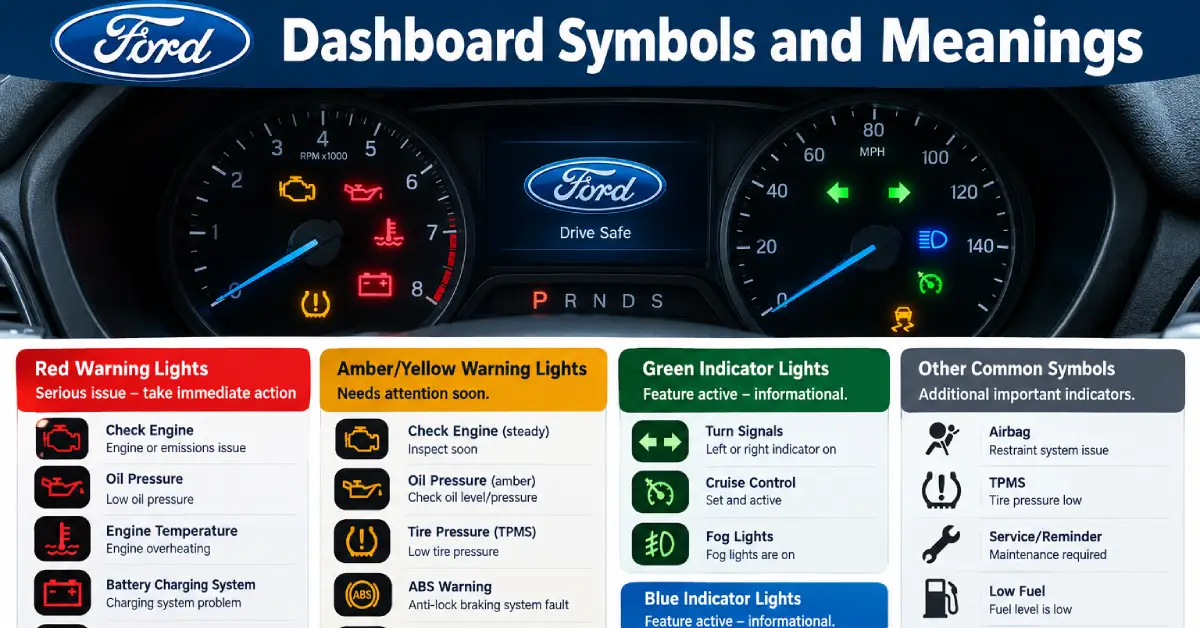
Understanding ford dashboard symbols and meanings can make an unfamiliar warning less stressful. Instead of guessing what an icon means, drivers can recognize its purpose and decide what action to take next.
Modern Ford vehicles use sensors, electronic control modules, and warning systems to monitor important functions. Learning ford dashboard symbols and meanings helps drivers notice problems early, protect components, and respond safely.
Understanding Ford Dashboard Warning Light Colors
Dashboard warning lights use colors to communicate urgency quickly. Red generally indicates a serious condition that may require immediate attention, while amber or yellow usually signals that a system needs checking. Green and blue indicators commonly show active features.
The color is only the starting point. The symbol, accompanying message, whether the light flashes, and the vehicle’s behavior all matter. Ford models can use different indicators depending on equipment and model year, so the owner’s manual remains the most reliable reference.
| Light color | General meaning | Typical response |
|---|---|---|
| Red | Serious warning | Stop safely when appropriate |
| Amber/Yellow | Attention needed | Check the issue soon |
| Green | Feature active | Usually informational |
| Blue | Feature active | Usually informational |
Common Ford Dashboard Symbols and Meanings
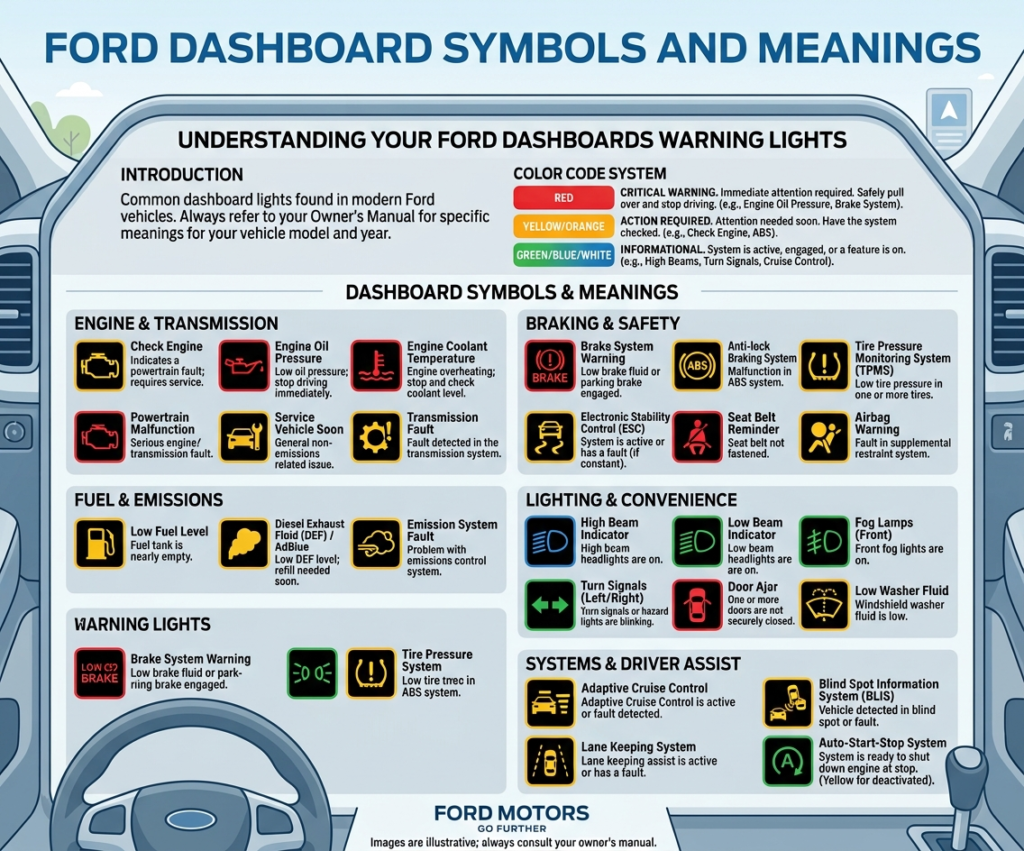
Recognizing ford dashboard symbols and meanings becomes easier when you understand the systems behind the icons. Common warnings include the check engine, oil pressure, engine temperature, battery, tire pressure, brake, ABS, airbag, and seat belt indicators.
No universal symbol chart can replace vehicle-specific information. Ford produces many models with different engines, drivetrains, safety systems, and equipment. Always compare an unfamiliar warning with the manual for your exact model and model year before deciding what it means.
| Symbol | General meaning | Recommended response |
|---|---|---|
| Check engine | Engine, emissions, or powertrain fault | Arrange diagnosis |
| Oil pressure | Possible low oil pressure | Stop safely and investigate |
| Engine temperature | Engine may be overheating | Stop safely when appropriate |
| Battery | Charging-system concern | Arrange inspection |
| TPMS | Low tire pressure detected | Check tire pressures |
| ABS | Anti-lock braking fault | Have the system inspected |
| Brake | Brake or parking-brake warning | Check promptly |
| Airbag | Restraint-system concern | Arrange inspection |
| Seat belt | Belt needs fastening | Fasten the belt |
Check Engine Light
The check engine light means the vehicle’s diagnostic system has detected a condition requiring attention. It can involve emissions equipment, engine operation, sensors, or the powertrain. The symbol alone cannot identify the failed component or provide a complete diagnosis.
A steady light and a flashing light should not be treated identically. A flashing warning can indicate a more urgent engine-related condition. If the vehicle also runs poorly, loses power, shakes, or produces unusual symptoms, reduce unnecessary driving and seek professional help.
Oil Pressure Warning
The oil pressure warning usually appears as an oil-can symbol. It indicates that the engine may not have adequate oil pressure for proper lubrication. Because moving engine components depend on lubrication, continuing to operate under low-pressure conditions can cause severe internal damage.
If this warning appears while driving, safely stop as soon as practical and follow the instructions in your owner’s manual. Check the oil level only when it is safe to do so. If the warning remains, professional inspection is important.
Engine Temperature Warning
The engine temperature warning tells you that the engine may be running hotter than its normal operating range. Possible causes include low coolant, cooling-system faults, a thermostat problem, a radiator issue, or another condition affecting temperature control.
Continuing to drive an overheating vehicle can cause expensive mechanical damage. If the warning appears, safely stop when possible and follow the vehicle’s overheating instructions. Never open a hot coolant reservoir or radiator cap because pressurized coolant or steam can cause serious burns.
Battery Charging System Warning
The battery-shaped warning light can indicate a charging-system problem. Despite its familiar appearance, it does not necessarily mean that the battery itself is the only problem. The alternator, wiring, drive belt, battery, or charging circuit may require inspection.
If the warning remains illuminated, unnecessary electrical loads can increase the demand on a system that may already be struggling. Avoid assuming the vehicle will continue operating normally. Arrange professional diagnosis, particularly if electrical functions begin behaving unusually or the vehicle loses power.
Tire Pressure Monitoring System
The Tire Pressure Monitoring System, or TPMS, warns drivers when tire pressure falls below the vehicle’s specified threshold. Correct pressure supports proper handling, braking behavior, tire life, and fuel economy. A warning should therefore be checked rather than ignored.
Check all tires with an accurate pressure gauge and inflate them according to the vehicle’s recommended specification. The correct pressure is normally listed on the vehicle information label or in the owner’s manual, rather than being the maximum pressure printed on the tire.
Anti-Lock Brake System Warning
The ABS warning indicates that the anti-lock braking system may have detected a fault. Depending on the vehicle and situation, normal braking may still be available, but the anti-lock function may not operate as intended during hard braking.
Because braking is essential for safe driving, an illuminated ABS warning deserves attention. If it appears together with a brake warning, unusual pedal feel, reduced braking performance, or other symptoms, stop safely and seek assistance rather than continuing normally.
Brake System Warning
The brake warning indicator can have different meanings depending on the Ford model. It may indicate that the parking brake is applied or point to another brake-system condition. A driver should not automatically dismiss a persistent warning.
Release the parking brake completely and check whether the warning disappears. If it remains illuminated, consult the owner’s manual. Changes in pedal feel, braking distance, fluid level, or vehicle behavior should be treated seriously because they can affect stopping performance.
Airbag Warning Light
The airbag warning indicates a possible problem with the vehicle’s restraint system. Depending on the model, the system can include airbags, sensors, seat-belt pretensioners, and other safety components. A warning means the system should be checked.
Do not attempt to repair an airbag system yourself. These components use specialized safety systems and can be dangerous when handled incorrectly. If the warning remains illuminated, arrange an inspection by a qualified technician or authorized Ford service provider.
Seat Belt Warning
The seat belt warning reminds occupants to fasten their belts. Depending on the vehicle, the system may use a visual indicator, warning chime, or additional reminders. The exact behavior can vary according to seating position and vehicle configuration.
Fasten the seat belt correctly before driving. If the warning remains active when belts are properly secured, check the owner’s manual for model-specific information. A sensor or buckle-related issue may need professional attention if the warning behaves unexpectedly.
Traction Control Indicator
The traction-control indicator can appear when the system is actively helping manage wheel slip or when the system has been switched off. On some vehicles, a persistent warning can indicate that the system has detected a fault.
A brief appearance during slippery conditions may simply show that the system is working. If the indicator stays on unexpectedly, read any accompanying message and consult the manual. Avoid assuming that every traction-control symbol represents the same condition across Ford models.
Read More: Emoji Face Meanings | Guide & Examples
Powertrain Warning
Some Ford vehicles display warnings associated with the powertrain. These can relate to systems responsible for generating, controlling, or transferring engine power. The exact meaning depends on the model, engine, transmission, and warning message.
Do not use the symbol alone to diagnose a specific component. Pay attention to reduced power, unusual noises, rough operation, or other symptoms. If the vehicle enters a reduced-power mode, have it diagnosed instead of repeatedly restarting it and continuing to drive.
Why Dashboard Warning Lights Matter
Understanding ford dashboard symbols and meanings is useful because warning lights provide an early communication channel between your vehicle and you. They can alert you to problems before a driver notices obvious changes in performance.
These warnings are especially valuable when treated as information rather than an inconvenience. A prompt response can sometimes prevent further damage, while ignoring a persistent warning may allow a manageable issue to become more complicated or expensive.
What Do Ford Dashboard Symbols Mean?
The meaning of ford dashboard symbols and meanings depends on the specific icon, color, vehicle system, and accompanying message. Some symbols indicate that a feature is operating, while others alert you to a potential fault requiring attention.
Look beyond the icon itself. Consider whether the light is red, amber, green, or blue; whether it is flashing; and whether the vehicle feels different. These details can help determine the appropriate next step.
Which Dashboard Warning Lights Are Serious?
Red warnings generally deserve immediate attention, especially when they involve oil pressure, engine temperature, braking, or another critical system. A driver should safely pull over when appropriate instead of assuming the warning will disappear.
Amber warnings are often less urgent, but that does not make them unimportant. A warning accompanied by smoke, overheating, loss of power, unusual sounds, steering problems, or changed braking behavior requires greater caution regardless of color.
| Situation | Sensible action |
|---|---|
| Red critical warning | Stop safely when appropriate |
| Flashing engine warning | Seek diagnosis promptly |
| Amber warning | Check the manual and arrange service |
| Green or blue indicator | Usually informational |
| Warning with unusual vehicle behavior | Stop safely and investigate |
What Should You Do When a Warning Light Appears?
When ford dashboard symbols and meanings become unfamiliar, avoid panic and avoid guessing. Maintain control of the vehicle, check the symbol when safe, and read any accompanying dashboard message. If the warning indicates immediate danger, find a safe place to stop.
Once stopped, consult your owner’s manual for the exact model. Check simple items only when appropriate, such as tire pressure. Do not attempt complicated repairs beside the road. If a warning persists or the vehicle behaves abnormally, arrange professional diagnosis.
A useful response sequence is:
- Identify the symbol.
- Note its color.
- Check whether it is steady or flashing.
- Read the dashboard message.
- Observe any changes in vehicle behavior.
- Stop safely if the warning is critical.
- Check simple maintenance items when appropriate.
- Contact roadside assistance or a qualified technician when necessary.
How Ford Sensors and Diagnostic Systems Help
Modern Ford vehicles use sensors and electronic control modules to monitor numerous systems. Information from these components helps the vehicle identify conditions that may require driver attention and communicate them through indicators, messages, and warning tones.
A warning light does not always identify a failed part. It may simply indicate that a monitored value has moved outside an expected range. Proper diagnosis can require diagnostic equipment, stored fault information, physical inspection, and knowledge of the specific vehicle system.
Can You Keep Driving With a Warning Light On?
Whether you can continue driving depends on the warning and the vehicle’s behavior. Green and blue indicators are generally informational. Some amber warnings may allow limited driving, but the underlying issue should still be checked.
Critical warnings should be handled differently. Oil pressure, overheating, serious brake problems, or major changes in steering or vehicle operation can require immediate stopping. Never assume that because the engine still runs, the vehicle is safe to continue driving.
Read More: Emoji Heart Meanings: What Every Heart Really Means
How to Find the Correct Symbol for Your Ford
For accurate ford dashboard symbols and meanings, use information specific to your vehicle rather than relying on a generic image found online. Model year, trim level, engine type, and optional equipment can affect which dashboard indicators are available.
Ford’s owner resources and vehicle manual are useful starting points. Record the exact symbol, its color, any accompanying message, and what the vehicle was doing when the warning appeared. That information can also help a technician diagnose the problem more efficiently.
Keep these details available:
- Model and model year
- Exact dashboard icon
- Warning color
- Flashing or steady behavior
- Accompanying message
- Recent repairs or maintenance
- Changes in performance or handling
Common Mistakes Drivers Make With Dashboard Warnings
One common mistake is assuming every warning means the vehicle is about to stop immediately. Another is treating every amber light as harmless. Both assumptions can lead to poor decisions because different warning systems communicate very different conditions.
Another mistake is replacing parts based only on an internet description. A warning symbol rarely provides enough information for an accurate repair diagnosis. Use the owner’s manual, diagnostic information, and qualified professional inspection when necessary.
Avoid these habits:
- Ignoring a persistent warning.
- Continuing to drive during overheating.
- Treating a flashing warning like a steady warning.
- Guessing the failed component.
- Opening a hot cooling system.
- Checking only one tire when TPMS activates.
- Assuming another Ford model uses identical warning behavior.
Dashboard Warning Lights and Vehicle Maintenance
Learning ford dashboard symbols and meanings can make routine maintenance more effective because drivers become more aware of changes that deserve attention. Warning lights can complement regular oil checks, tire-pressure checks, scheduled servicing, and other maintenance tasks.
However, dashboard indicators should not replace scheduled maintenance. Some problems may develop without triggering an immediate warning, while other alerts can appear because of conditions that require further diagnosis. Regular servicing remains important even when the dashboard looks normal.
How Warning Lights Can Prevent Bigger Problems
A dashboard warning can provide an opportunity to address a problem before it causes additional damage. For example, a tire-pressure warning may encourage a driver to correct inflation before abnormal wear becomes worse, while a temperature warning can alert a driver before overheating causes severe engine damage.
The warning itself is not the repair. It is a signal that something deserves attention. Responding promptly, safely, and appropriately gives drivers a better chance of preventing a minor condition from developing into a larger problem.
Understanding Flashing and Steady Warning Lights
The difference between a flashing and steady light can be important. Some warning systems use flashing indicators to communicate a more urgent condition, while a steady light may indicate a persistent issue that still needs attention.
Never assume this behavior is identical across all Ford models. The owner’s manual explains the specific operation for your vehicle. If a warning begins flashing and the vehicle also runs poorly, loses power, shakes, overheats, or behaves unusually, seek assistance promptly.
When to Contact a Professional
If ford dashboard symbols and meanings still leave you uncertain after checking the manual, professional diagnosis is the safest next step. This is especially true when a warning remains illuminated, returns repeatedly, or appears with unusual vehicle behavior.
A qualified technician can retrieve diagnostic information, inspect related components, test electrical circuits, and determine whether a warning comes from a sensor, mechanical component, software-related condition, or another system. Avoid replacing expensive parts based only on a warning-light description.
Frequently Asked Questions About Ford Dashboard Symbols
What is the most important Ford dashboard warning light?
There is no single warning that is always the most important. Oil pressure, overheating, brake, and other critical warnings can require immediate attention depending on the situation and vehicle behavior.
What does a red dashboard light mean?
A red warning generally signals a condition requiring prompt attention. The exact response depends on the symbol and accompanying message, so safely stopping and consulting the owner’s manual may be necessary.
What does an amber Ford warning light mean?
An amber or yellow warning generally indicates that a system needs attention. It does not automatically mean the vehicle must stop immediately, but it should not simply be ignored.
Can I drive with the check engine light on?
A steady check engine light may allow limited driving in some situations, but the vehicle should be checked. A flashing light or serious change in vehicle behavior requires greater caution.
Why is my Ford tire pressure light on?
The TPMS warning may indicate that one or more tires are below the recommended pressure. Check all tires with a reliable gauge and adjust them according to the vehicle’s specified pressure.
Why is my Ford battery light on?
The battery-shaped indicator can signal a charging-system problem. The battery, alternator, wiring, drive belt, or another electrical component may need inspection.
What should I do if my engine temperature warning appears?
Safely stop when appropriate and follow your owner’s manual. Never open a hot coolant system because pressurized coolant or steam can cause serious burns.
Where can I find accurate Ford warning-light information?
Use the owner’s manual for your exact model and year. Model-specific information is more reliable than a generic dashboard-symbol chart because Ford vehicles can have different systems and indicators.
Conclusion
Recognizing ford dashboard symbols and meanings helps you understand what your vehicle is communicating instead of reacting with confusion. Knowing the difference between informational indicators and serious warnings can make driving safer.
Keep your owner’s manual accessible and investigate unfamiliar alerts promptly. With a basic understanding of ford dashboard symbols and meanings, you can respond more confidently, protect your vehicle, and know when professional help is appropriate.

MeaningShelf shares meaningful quotes, thoughtful messages, and helpful word meanings, managed by Lily Anderson, an SEO content writer with 2 years of experience, creating engaging content that inspires readers and helps them find the right words for every moment.
2 thoughts on “Ford Dashboard Symbols and Meanings Guide”