
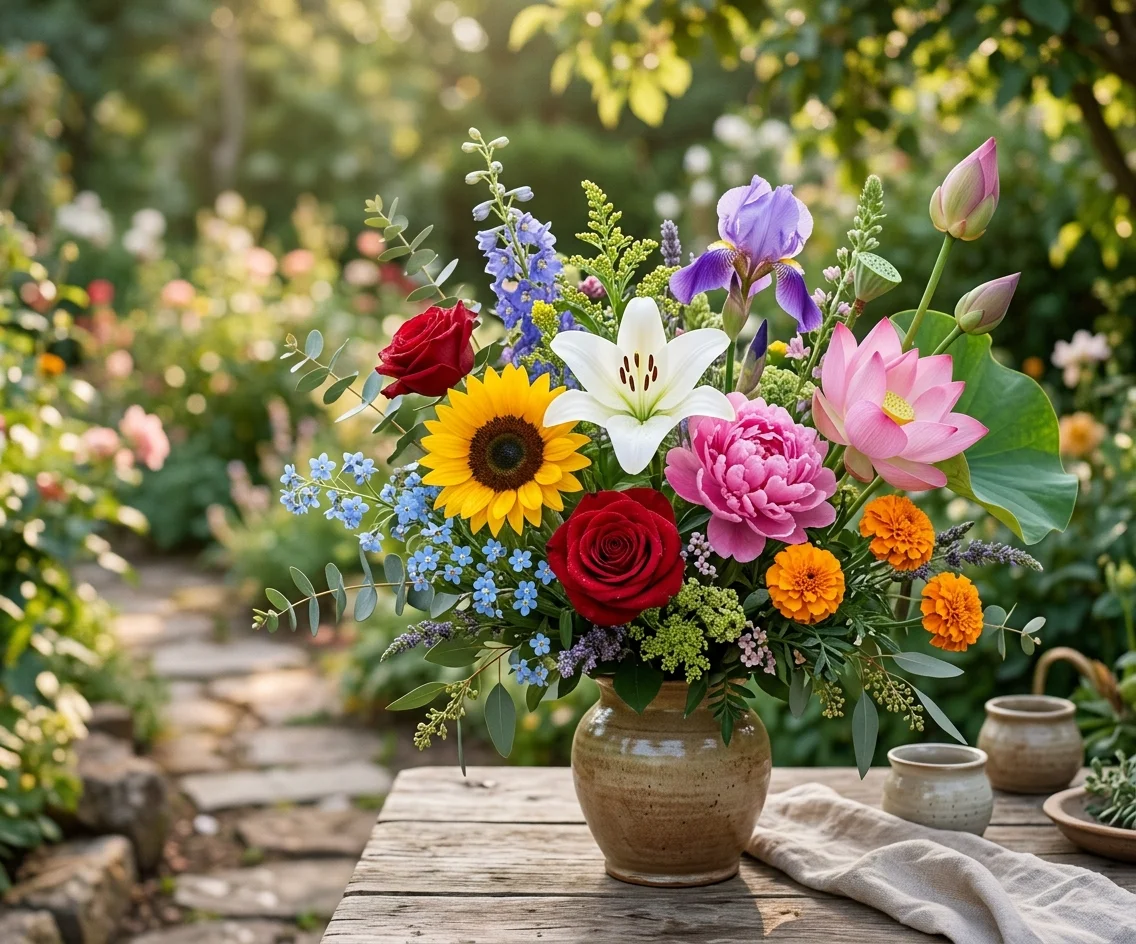
Flowers can speak without words. A rose may express love, a sunflower can brighten a friendship, and a lily may offer comfort. Their beauty becomes even more meaningful when you understand their symbolism.
Learning flowers and their meanings can make a bouquet feel personal instead of random. From romantic gestures to birthdays, sympathy, celebrations, and fresh beginnings, every bloom can add a thoughtful message.
Flowers and Their Meanings A to Z
Flower symbolism has developed through traditions, cultures, art, literature, and everyday customs. Some meanings are widely recognized, while others depend on the flower’s color, culture, or occasion.
Use this A-to-Z guide as a helpful starting point rather than a strict dictionary. The same flower can communicate different emotions in different places and situations.
A
🌸 Alstroemeria often represents friendship, devotion, and mutual support.
🌺 Amaryllis can symbolize determination and striking beauty.
🌼 Aster is commonly associated with love, patience, faith, and remembrance.
B
🤍 Baby’s breath is associated with innocence, purity, and everlasting love.
🌺 Begonia can suggest caution and deep thoughts.
💙 Bluebell is linked with humility, gratitude, and constancy.
C
🌸 Carnation meanings vary by color, with red suggesting admiration and white representing purity.
🌼 Chrysanthemum can symbolize honor, longevity, and remembrance, although its meaning changes across cultures.
D
🌼 Daffodil represents spring, renewal, hope, and new beginnings.
🌼 Daisy often suggests innocence and cheerful simplicity.
🌺 Dahlia can represent inner strength, creativity, elegance, and commitment.
E
🏔️ Edelweiss is traditionally associated with courage, devotion, and enduring love.
🌿 Elderflower has connections with protection and folklore, while eucalyptus flowers can suggest renewal and resilience.
F
🌸 Freesia commonly represents friendship, trust, innocence, and thoughtfulness.
💙 Forget-me-not is strongly connected with remembrance and enduring affection, making it meaningful for honoring someone special.
G
🤍 Gardenia often symbolizes purity, grace, admiration, and secret love.
🌼 Gerbera suggests happiness and cheerfulness.
⚔️ Gladiolus traditionally represents strength, sincerity, and integrity.
H
🌿 Hawthorn is associated with hope, protection, and spring.
🌺 Hibiscus can symbolize beauty, charm, and hospitality.
🌸 Honeysuckle often represents affection, devotion, and lasting happiness.
I
💜 Iris commonly represents wisdom, courage, faith, and hope. Its meaning can change according to color, culture, and historical tradition.
J
🤍 Jasmine is widely associated with love, purity, grace, beauty, and fragrance. In several cultures, jasmine also appears in religious ceremonies and celebrations.
L
💜 Lavender represents calmness, purity, devotion, and grace.
🤍 Lily can symbolize purity, renewal, sympathy, or innocence.
🌸 Lotus represents spiritual growth, rebirth, resilience, and transformation.
M
🤍 Magnolia can suggest dignity, beauty, perseverance, and nobility.
🧡 Marigold may represent warmth, creativity, passion, remembrance, or grief depending on cultural tradition.
O
🌸 Orchid commonly symbolizes beauty, refinement, luxury, strength, and admiration.
🤍 Orange blossom can represent purity, fertility, marriage, and good fortune, making it especially popular in wedding traditions.
P
💜 Pansy is linked with remembrance, thoughtfulness, and loving memories.
🌸 Peony can represent romance, prosperity, good fortune, and a happy marriage.
❤️ Poppy may symbolize remembrance, consolation, peace, or restful sleep.
R
🌹 Rose has some of the most recognizable floral symbolism. Red suggests romantic love, pink admiration, yellow friendship, and white purity or remembrance.
S
🌺 Snapdragon can represent grace, strength, and resilience.
🤍 Snowdrop symbolizes hope and renewal.
🌻 Sunflower commonly represents happiness, warmth, optimism, loyalty, and vitality.
T
🌷 Tulip is strongly associated with love and spring. Red tulips can express deep love, while yellow tulips often suggest cheerful thoughts and positive feelings.
V
💜 Violet commonly represents modesty, faithfulness, humility, and remembrance. Its delicate appearance often makes it a symbol of quiet affection and gentle devotion.
W
💜 Wisteria can symbolize tenderness, devotion, longevity, and graceful beauty.
🌸 Water lily is often associated with purity, peace, rebirth, and spiritual renewal.
Read More: Car Light Meanings: Dashboard Symbols & Warning Lights Explained
Flower Color Meanings: What Each Color Says
Color can completely change the emotional tone of a flower. Red usually feels passionate, pink gentle, yellow cheerful, and white peaceful. These associations are common, but they are not universal rules.
Flowers and their meanings become easier to understand when you consider both the bloom and its shade. A red rose, for example, carries a different traditional message from a yellow rose.
| 🌈 Color | 💐 Common symbolism |
|---|---|
| ❤️ Red | Love, passion, courage |
| 💗 Pink | Affection, admiration, tenderness |
| 💛 Yellow | Friendship, happiness, optimism |
| 🤍 White | Purity, peace, sympathy |
| 💙 Blue | Calmness, trust, serenity |
| 💜 Purple | Dignity, admiration, mystery |
| 🧡 Orange | Energy, enthusiasm, warmth |
| 💚 Green | Renewal, harmony, freshness |
| 🖤 Black | Mystery, farewell, individuality |
When choosing a flower, do not rely on color alone. The flower type, relationship, occasion, and cultural background can all influence the message a bouquet communicates.
Flower Meanings by Occasion and Feeling
Flowers can make an occasion feel more personal because their symbolism adds another layer to a gift. Romantic roses, cheerful sunflowers, peaceful lilies, and friendship-focused blooms can all communicate different emotions.
Flowers and their meanings can guide your choice, but personal preference matters too. Someone’s favorite flower may carry more emotional value than a traditional symbolism chart.
🌹 For love: Red roses, tulips, orchids
🌼 For friendship: Yellow roses, alstroemeria, freesias
🤍 For sympathy: Lilies, chrysanthemums, white roses
🌱 For new beginnings: Daffodils, snowdrops, lotus
💪 For strength: Gladiolus, sunflowers, protea
🙏 For gratitude: Pink roses, carnations
🕊️ For remembrance: Forget-me-nots, poppies, violets
🎉 For celebration: Gerberas, sunflowers, tulips
The best bouquet does not have to follow every traditional rule. Combining meaningful flowers with the recipient’s favorite colors can create something much more personal.
Birth Month Flowers and Their Meanings
Birth flowers connect particular months with traditional blooms. They are popular for birthday bouquets, jewelry, artwork, tattoos, greeting cards, and personalized gifts because the association gives a present a personal touch.
Flowers and their meanings can also make a birth-flower gift more thoughtful. However, birth-flower lists are not completely standardized, and some months have alternative flowers depending on the source or tradition.
| 📅 Month | 🌸 Common birth flower | ✨ Traditional association |
|---|---|---|
| January | Carnation | Love, admiration |
| February | Violet | Modesty, faithfulness |
| March | Daffodil | Renewal, hope |
| April | Daisy | Innocence, purity |
| May | Lily of the valley | Happiness, sweetness |
| June | Rose | Love, beauty |
| July | Larkspur | Positivity, open heart |
| August | Gladiolus | Strength, integrity |
| September | Aster | Love, wisdom |
| October | Marigold | Warmth, creativity |
| November | Chrysanthemum | Longevity, honor |
| December | Narcissus | Hope, renewal |
If you are buying a birth flower as a gift, check which tradition or flower list the recipient prefers. That small detail can prevent confusion when alternative birth flowers are used.
Zodiac Flowers and What They Mean
Zodiac flowers are symbolic associations rather than a scientifically established system. Different guides pair different blooms with zodiac signs, so these combinations are best treated as cultural, decorative, or modern interpretations.
Flowers and their meanings can make zodiac-themed gifts more interesting, especially when the flower’s traditional symbolism also fits the personality or occasion.
| ♈ Sign | 🌸 Commonly linked flower | ✨ Symbolic theme |
|---|---|---|
| Aries | Honeysuckle | Energy, determination |
| Taurus | Rose | Love, beauty |
| Gemini | Lavender | Adaptability, communication |
| Cancer | White rose | Sensitivity, affection |
| Leo | Sunflower | Warmth, confidence |
| Virgo | Morning glory | Thoughtfulness, devotion |
| Libra | Rose | Harmony, beauty |
| Scorpio | Chrysanthemum | Depth, transformation |
| Sagittarius | Carnation | Optimism, adventure |
| Capricorn | Pansy | Loyalty, thoughtfulness |
| Aquarius | Orchid | Individuality |
| Pisces | Water lily | Imagination, spirituality |
Because zodiac-flower associations are not standardized, it is better to describe them as traditional or popular associations rather than official pairings.
State and National Flowers and Their Meanings
State flowers are official or designated floral symbols associated with U.S. states. Examples include the camellia for Alabama, California poppy for California, sunflower for Kansas, rose for New York, and bluebonnet for Texas.
National flowers work similarly as cultural or official symbols for countries. They can reflect local landscapes, history, traditions, identity, or national pride.
| 🇺🇸 Place | 🌸 Flower |
|---|---|
| Alabama | Camellia |
| California | California poppy |
| Kansas | Sunflower |
| New York | Rose |
| Texas | Bluebonnet |
| Japan | Chrysanthemum |
| Netherlands | Tulip |
| Scotland | Thistle |
State and national flower lists can change or contain distinctions between an officially designated flower and a commonly recognized national symbol. Always check an authoritative source for formal status.
Read More: Dream Meanings: What Your Dreams Really Mean
The Languages of Flowers, From Floriography to Hanakotoba
Floriography describes the symbolic use of flowers to communicate messages. The practice became particularly fashionable in Victorian-era Europe, when people used bouquets and individual blooms to express feelings indirectly.
Floriography became especially popular during the Victorian era, and you can learn more about the language of flowers from the Royal Horticultural Society (RHS)
Hanakotoba, written 花言葉 in Japanese, literally refers to the language of flowers. Japanese floral symbolism developed within its own cultural context, so its associations should not simply be treated as Victorian meanings translated into Japanese.
Flowers and their meanings therefore belong to a much larger history of symbolism. Literature, religion, ceremonies, folklore, art, and regional customs have all influenced how particular blooms are understood.
How Florists Use Flowers and Their Meanings Without Getting Caught Out
Professional florists do not usually build an arrangement by following a symbolism dictionary word for word. They consider the event, recipient, season, flower availability, color palette, fragrance, shape, texture, and overall design.
🌹 Romance: The florist may emphasize roses, tulips, or orchids.
🤍 Sympathy: Softer colors and traditionally peaceful flowers may be appropriate.
🎉 Celebration: Bright flowers can create a lively visual effect.
🌱 Fresh start: Spring blooms can reinforce renewal and optimism.
Flowers and their meanings are useful starting points, but the arrangement still needs to look beautiful and suit the occasion. A florist may also suggest alternatives when a specific flower is unavailable or culturally inappropriate.
For multicultural weddings, funerals, and ceremonies, this matters even more. A flower that communicates happiness in one culture may carry mourning or remembrance in another, so context should always come first.
FAQ
What is the language of flowers?
The language of flowers is a symbolic tradition where blooms communicate emotions or messages. Floriography is the term commonly connected with this practice, while hanakotoba refers specifically to Japanese flower language.
Which flower means love?
🌹 Red roses are among the best-known traditional symbols of romantic love. Red tulips can also express deep love, while orchids may communicate admiration, affection, beauty, or refinement depending on context.
What do flower colors mean?
Flower colors influence traditional symbolism. ❤️ Red often suggests passion, 💗 pink affection, 💛 yellow friendship, 🤍 white purity or sympathy, 💙 blue calmness, and 💜 purple admiration or dignity.
Which flowers symbolize strength?
🌺 Gladiolus is traditionally connected with strength and integrity. Sunflowers can suggest vitality and resilience, while protea is often associated with transformation, courage, and resilience.
What flower means new beginnings?
🌼 Daffodils are strongly associated with spring, renewal, hope, and new beginnings. Snowdrops can also suggest renewal, while lotus flowers are commonly connected with rebirth and spiritual transformation.
What is my birth month flower?
🌸 Traditional lists commonly associate January with carnation, February with violet, March with daffodil, April with daisy, May with lily of the valley, and June with rose. Later months have their own traditional associations.
Do flower meanings differ between cultures?
Yes. Floral symbolism is not universal. A flower or color can communicate different ideas across countries, religions, historical periods, and traditions. Cultural context is important before treating any meaning as absolute.
Which flowers and Their meanings surprised you most?
🌸 Perhaps the biggest surprise is how much meaning can exist behind a familiar bloom. A simple flower can represent love, remembrance, courage, friendship, hope, renewal, or cultural identity.
When choosing flowers and their meanings, look beyond one dictionary definition. Consider the flower, color, occasion, relationship, cultural background, and personal memories connected with the recipient.
The symbolism makes a bouquet more thoughtful, but it should never become a rigid set of rules. Personal preference can be just as meaningful as centuries-old floral traditions.
Ultimately, flowers and their meanings offer a beautiful way to add emotion to an ordinary gesture. Whether you choose one flower or a colorful arrangement, the message matters most.

MeaningShelf shares meaningful quotes, thoughtful messages, and helpful word meanings, managed by Lily Anderson, an SEO content writer with 2 years of experience, creating engaging content that inspires readers and helps them find the right words for every moment.
1 thought on “Flowers and Their Meanings: A-Z Guide to Flower Symbolism”