
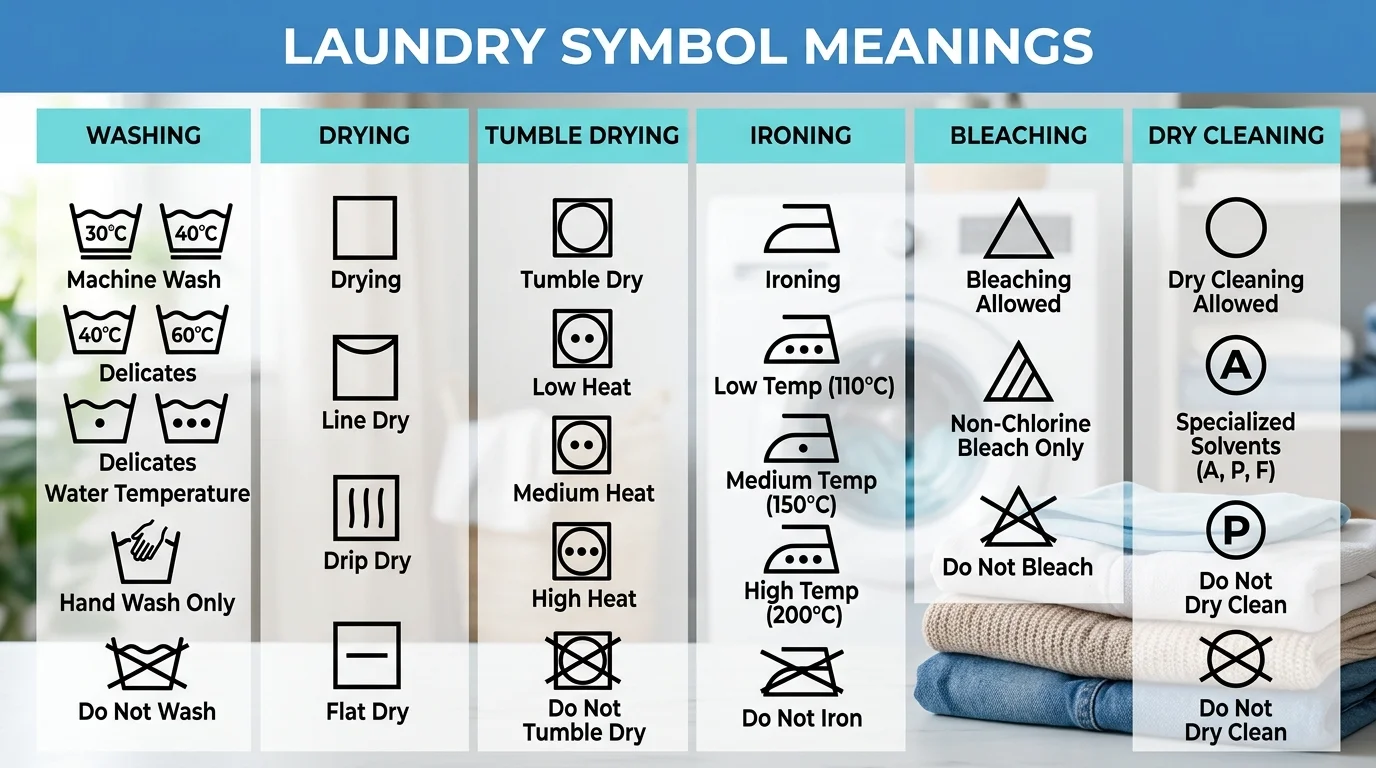
Ever stared at a clothing label wondering what those tiny tubs, circles, dots, and crosses mean? These simple symbols contain important instructions that can protect your favorite clothes from damage.
Learning laundry symbol meanings makes clothing care much easier. Once you recognize the basic shapes, you can quickly understand how to wash, dry, iron, bleach, or clean each garment properly.
Care labels are designed to give you quick instructions without filling the label with lengthy sentences. Each symbol represents a specific type of garment care.
The five main symbols you will see are:
| Symbol | Represents |
|---|---|
| 🛁 Tub | Washing |
| △ Triangle | Bleaching |
| □ Square | Drying |
| ♨ Iron | Ironing |
| ○ Circle | Professional cleaning |
Small details change the meaning of each symbol. Numbers, dots, lines, letters, and crosses tell you exactly how gently or intensely a treatment should be performed.
For example:
- Numbers inside a washing tub show the maximum washing temperature.
- Dots indicate heat levels on ironing and tumble-drying symbols.
- Lines can indicate gentler treatment.
- A cross generally means do not use that treatment.
- A hand inside a tub means hand washing.
- Letters inside a circle provide information for professional cleaners.
The most important rule is simple: read the complete care label before washing the garment.
A shirt might be machine washable but unsuitable for tumble drying. Another garment may tolerate ironing but only at low heat.
The label should be treated as the manufacturer’s care instructions rather than a suggestion. Exceeding the stated temperature or using a prohibited treatment can cause shrinkage, fading, stretching, melting, or permanent changes.
When reading a label, identify the symbol first and then examine its markings. This makes unfamiliar labels much easier to understand.
Quick Guide to Laundry Symbols
| Care category | Main symbol | What to check |
|---|---|---|
| Washing | Tub | Temperature and lines |
| Bleaching | Triangle | Allowed or prohibited |
| Drying | Square | Tumble or natural drying |
| Ironing | Iron | Number of dots |
| Professional cleaning | Circle | Letters and restrictions |
Understanding laundry symbol meanings also helps you sort clothes correctly before starting a washing cycle.
- Separate delicate garments from heavy items.
- Check temperature limits.
- Follow drying instructions separately.
- Avoid prohibited treatments.
- Pay attention to special fabric requirements.
Read More: Tattoo Meanings: 35 Symbols Explained Before You Get Inked
Why Care Labels Matter
Care labels help you avoid common laundry mistakes and preserve clothing for longer.
They are especially useful for:
- Silk and wool garments
- Cashmere clothing
- Tailored jackets
- Embroidered pieces
- Printed clothing
- Synthetic fabrics
- Blended fabrics
- Clothes with special finishes
A garment’s appearance does not always tell you how it should be cleaned. Two shirts can look almost identical while having completely different care requirements.
Checking the label takes only a few seconds and can prevent costly mistakes.
DRY CLEANING
Dry cleaning symbols use a circle to indicate professional cleaning. A plain circle generally means professional cleaning is permitted, while letters or additional markings provide information about the appropriate process.
A crossed-out circle means the garment should not be dry cleaned. These instructions are particularly important for clothing with sensitive dyes, finishes, trims, adhesives, or specialized construction.
Common Dry Cleaning Symbols
| Symbol | Meaning |
|---|---|
| Circle | Professional cleaning permitted |
| Circle with letter | Cleaning process information |
| Crossed-out circle | Do not dry clean |
| Circle with additional markings | Follow cleaning restrictions |
The letters inside a professional-cleaning symbol are primarily useful to cleaners. You do not normally need to memorize what every letter represents.
If your garment says dry clean only, avoid putting it through a normal washing machine unless a professional or manufacturer provides different instructions.
Professional cleaning may be appropriate for:
- Suits
- Structured jackets
- Formal dresses
- Coats
- Some delicate fabrics
- Specialty garments
Dry cleaning does not simply mean “cleaning without water.” Professional cleaners use specialized processes and solvents rather than a standard household washing cycle.
If a garment has a difficult stain, tell the cleaner about it. Also mention if you have already applied a stain-removal product.
Do not remove the care label after purchasing clothing. It can provide valuable information every time the garment needs cleaning.
Dry Cleaning Tips
- Check the circle before washing.
- Never ignore a crossed-out circle.
- Keep the care label attached.
- Tell cleaners about difficult stains.
- Follow additional written instructions.
- Do not assume expensive clothing automatically requires dry cleaning.
Laundry symbol meanings can help you recognize when professional cleaning is required instead of ordinary washing.
A professional cleaner can also inspect the garment and consider its fabric, construction, color, and finishing before choosing a cleaning method.
IRONING
The ironing symbol looks like a traditional clothes iron. It tells you whether ironing is allowed and how much heat can safely be applied.
Dots inside the iron indicate temperature levels:
| Iron marking | General heat level |
|---|---|
| One dot | Low |
| Two dots | Medium |
| Three dots | High |
| Crossed-out iron | Do not iron |
One dot is generally suitable for lower-temperature ironing. Two dots indicate medium heat, while three dots allow a higher temperature.
Always check the garment label instead of guessing based only on fabric type.
Heat-sensitive materials can be damaged by excessive temperature. Synthetic fibers may melt or become shiny, while delicate fabrics can scorch or develop permanent marks.
Ironing Tips
- Check the dots before heating the iron.
- Use the recommended temperature.
- Keep the iron moving.
- Avoid prolonged pressure on one spot.
- Check the soleplate for residue.
- Use a pressing cloth when appropriate.
- Never iron a crossed-out symbol.
For delicate clothing, place a clean pressing cloth between the iron and fabric when suitable. This can provide an additional layer of protection.
Avoid ironing directly over delicate prints, decorations, or plastic details unless the care instructions specifically allow it.
Steam can help remove wrinkles from some garments, but it should not automatically be assumed safe for every fabric.
Understanding laundry symbol meanings helps you choose an appropriate heat setting instead of relying on guesswork.
If a garment is labeled as non-iron or wrinkle-resistant, careful washing and drying may reduce the need for pressing.
Iron Temperature Guide
| Dots | Use |
|---|---|
| 1 dot | Low heat |
| 2 dots | Medium heat |
| 3 dots | Higher heat |
| Crossed iron | No ironing |
Always stay within the temperature indicated on the label.
DRYING
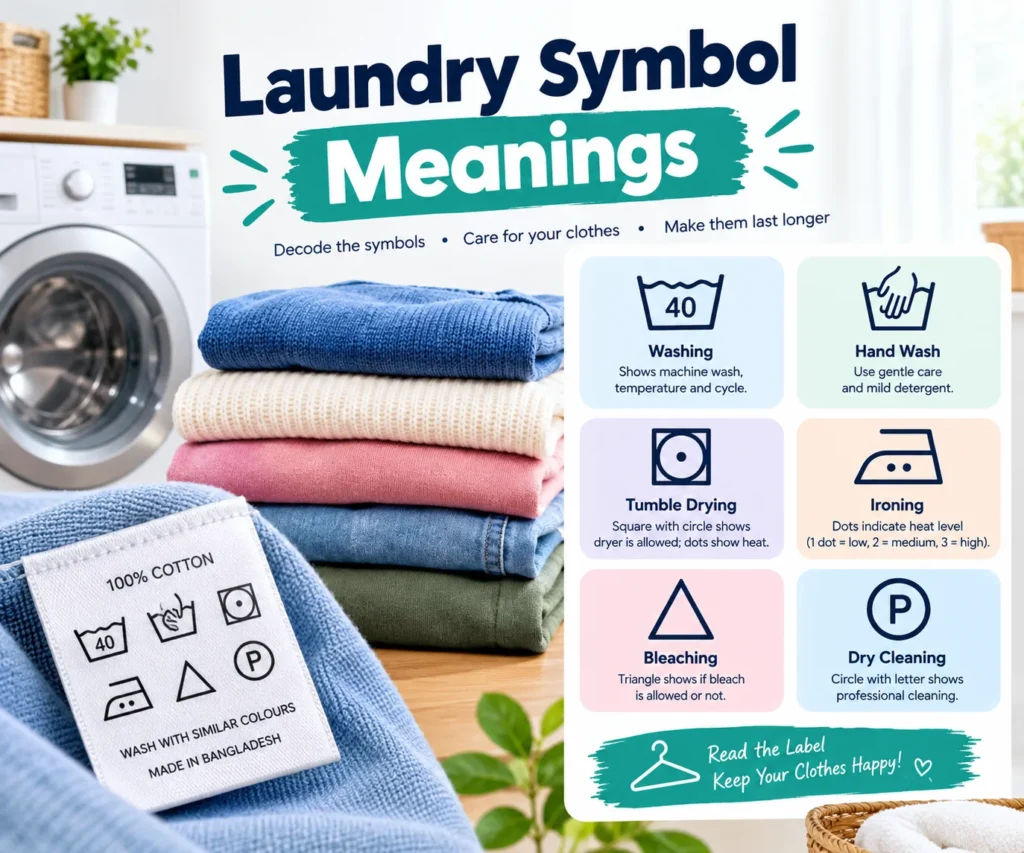
Drying symbols use a square. The square tells you that the instruction relates to drying, while additional markings explain which drying method is appropriate.
A square containing a circle represents tumble drying. Dots inside the circle indicate the permitted heat level.
| Drying symbol | Meaning |
|---|---|
| Square with circle | Tumble drying permitted |
| One dot | Lower heat |
| Two dots | Higher heat |
| Crossed-out square with circle | Do not tumble dry |
A crossed-out tumble-dry symbol means the garment should not go into a tumble dryer.
Natural drying symbols can indicate different methods, including:
- Line drying
- Drip drying
- Flat drying
- Drying in the shade
These instructions matter because different fabrics respond differently to heat, movement, and hanging.
A wet knitted garment, for example, can become stretched if it is hung while heavy with water. If the label recommends flat drying, follow that instruction.
Tumble Drying Tips
- Check the square before using a dryer.
- Look for dots inside the circle.
- Never tumble dry a crossed-out symbol.
- Avoid excessive heat.
- Do not overload the dryer.
- Remove clothing promptly after drying.
- Follow natural-drying instructions when shown.
Dryers can expose garments to both heat and mechanical movement. Even if an item can be washed in a machine, it may not be suitable for tumble drying.
Laundry symbol meanings are useful here because washing and drying are separate instructions. Never assume that a washable garment can automatically go into the dryer.
High temperatures can contribute to:
- Shrinkage
- Fabric distortion
- Fading
- Damage to elastic
- Damage to prints
- Excessive wear
If tumble drying is permitted, use the heat level shown on the label.
Natural Drying
Natural drying symbols provide more specific instructions than simply saying “air dry.”
For example:
| Method | General instruction |
|---|---|
| Line drying | Hang according to the label |
| Drip drying | Allow water to drain naturally |
| Flat drying | Lay the garment flat |
| Shade drying | Keep away from direct sunlight |
Following these details can help preserve the garment’s original shape and color.
Read More: Hyundai Dashboard Symbols and Meanings: Complete Guide
HAND WASHING
Hand washing is commonly recommended for delicate garments that require gentle handling. The symbol shows a hand inside a washing tub.
It is often found on garments made from sensitive materials such as:
- Silk
- Cashmere
- Wool
- Lace
- Delicate blends
- Specialty fabrics
Hand washing does not mean the garment should be scrubbed aggressively. Gentle movement is usually more appropriate.
Hand Washing Steps
- Check the recommended temperature.
- Fill a suitable container with water.
- Add an appropriate detergent.
- Gently move the garment through the water.
- Rinse carefully.
- Avoid unnecessary twisting.
- Remove excess water gently.
- Follow the recommended drying method.
Hot water can cause problems for some delicate fabrics, so never exceed the temperature stated on the label.
Avoid vigorous rubbing because friction can damage fibers or affect the appearance of delicate materials.
If the label prohibits wringing, do not twist the garment to remove water.
Instead, gently press out excess water. For some delicate items, placing the garment on a clean towel and carefully pressing or rolling it can be useful.
Hand Washing Mistakes to Avoid
- Using very hot water
- Scrubbing aggressively
- Twisting delicate garments
- Using excessive detergent
- Leaving garments soaking unnecessarily
- Hanging heavy wet knitwear
- Ignoring drying instructions
Silk can be sensitive to heat, chemicals, and friction. Wool and cashmere can also shrink or felt when exposed to unsuitable conditions.
Understanding laundry symbol meanings makes it easier to recognize when an item needs gentler treatment than a standard washing cycle.
A washing machine’s “delicate” setting is not automatically identical to hand washing. If the manufacturer specifically recommends hand washing, follow that instruction unless appropriate professional guidance says otherwise.
After washing, reshape the garment if appropriate and follow the recommended drying method.
SYNTHETIC WASHING
Synthetic fabrics include materials such as polyester, nylon, acrylic, and other manufactured fibers. Many are machine washable, but their care requirements can still vary.
The washing tub tells you whether washing is permitted. Numbers inside it show the maximum temperature.
| Symbol marking | General meaning |
|---|---|
| Tub | Washing permitted |
| 30 | Maximum 30°C |
| 40 | Maximum 40°C |
| One line underneath | Gentler treatment |
| Two lines underneath | Very gentle treatment |
| Crossed-out tub | Do not wash |
Lines underneath the tub indicate reduced mechanical action. This can be important for delicate synthetic garments or clothing with special finishes.
Synthetic Washing Tips
- Check the maximum temperature.
- Use the recommended washing cycle.
- Pay attention to lines underneath the tub.
- Avoid unnecessarily high temperatures.
- Check the separate drying symbol.
- Check the ironing symbol.
- Avoid overloading the machine.
Synthetic fabrics often dry quickly, but that does not mean every synthetic garment can safely be tumble dried.
High heat can affect elastic components, printed designs, coatings, and certain synthetic fibers.
If ironing is allowed, check the dots on the iron symbol before applying heat.
Blended fabrics require additional attention because they contain multiple fiber types. The care label should take priority over assumptions based on one material.
Turning printed garments inside out before washing may reduce surface friction when the care instructions allow it.
Remove clothing from the washing machine promptly after the cycle finishes. Leaving damp garments inside for an extended period can lead to unpleasant odors and excessive creasing.
Laundry symbol meanings help you understand the treatment a synthetic or blended garment can tolerate.
Washing Temperature Guide
| Temperature | Common use |
|---|---|
| 30°C | Cooler wash for many everyday or delicate garments |
| 40°C | Common wash temperature for many washable items |
| 60°C | Hotter wash for garments whose labels permit it |
| 95°C | Very high temperature, only where specifically permitted |
These temperatures are maximums when shown inside the washing symbol. They should not be treated as universal recommendations for every fabric.
Spin and Rinse Instructions
Lines beneath the tub can indicate reduced mechanical action.
- No line: Normal treatment may be permitted.
- One line: Gentler treatment is required.
- Two lines: Very gentle treatment is required.
Follow the label rather than choosing the strongest washing cycle simply because the garment appears durable.
Laundry symbol meanings are most useful when you consider the complete set of instructions rather than one symbol alone.
A tub can tell you that washing is allowed, while the drying symbol may tell you that the dryer is prohibited. The iron may then specify a low-temperature setting.
That combination provides a complete care routine.
Quick Laundry Checklist
Before starting your laundry, check:
- Washing: Can the garment be machine washed?
- Temperature: What is the maximum temperature?
- Bleaching: Is bleach allowed?
- Drying: Can it go into the dryer?
- Heat: What dryer or iron temperature is permitted?
- Professional cleaning: Is dry cleaning required or prohibited?
- Special handling: Does the garment require hand washing or flat drying?
Using this quick checklist can make laundry much easier and reduce accidental damage.
The most common mistake is treating every garment as though it has identical care requirements. Fabrics, dyes, finishes, construction, and decorative details can all affect how an item should be handled.
A few seconds of label checking can therefore save time, money, and frustration.
When a symbol is unfamiliar, identify its basic shape first. Then look for dots, numbers, lines, letters, or crosses.
This approach is much easier than trying to memorize every possible combination.
Conclusion
Laundry symbol meanings become simple once you understand the basic shapes, markings, temperatures, and restrictions. A quick label check can prevent shrinking, fading, stretching, heat damage, and other avoidable problems.
Using laundry symbol meanings correctly helps you care for clothing with confidence. Check every label, choose suitable washing and drying methods, and give delicate garments the gentle treatment their instructions require.
Frequently Asked Questions:
What are the laundry symbol meanings on clothing labels?
They explain how to wash, dry, iron, bleach, and professionally clean a garment safely.
How can I understand laundry symbol meanings quickly?
Start by identifying the main shape, then check its dots, numbers, lines, letters, or crosses for specific instructions.
What do laundry symbol meanings tell you about washing?
They show whether an item can be machine washed, hand washed, and what maximum temperature should be used.
What are the laundry symbol meanings for tumble drying?
A square with a circle means tumble drying is allowed, while dots indicate the permitted heat level.
How do laundry symbol meanings explain ironing temperatures?
An iron with one, two, or three dots indicates low, medium, or high heat respectively.
What do laundry symbol meanings say about hand washing?
A hand inside a tub indicates that the garment should be hand washed using gentle treatment.
Can laundry symbol meanings tell me if clothes need dry cleaning?
Yes. A circle generally indicates professional cleaning, while a crossed-out circle means the garment should not be dry cleaned.
What do laundry symbol meanings mean when a symbol has a cross?
A cross generally means you should not use the treatment represented by that particular symbol.
How do laundry symbol meanings help prevent clothing damage?
They provide instructions for temperature, washing, drying, ironing, and cleaning, helping reduce shrinkage, fading, stretching, and heat damage.
Where can I find laundry symbol meanings on clothes?
They are usually printed or sewn onto a care label found inside clothing, often near a side seam, collar, or waistband.

MeaningShelf shares meaningful quotes, thoughtful messages, and helpful word meanings, managed by Lily Anderson, an SEO content writer with 2 years of experience, creating engaging content that inspires readers and helps them find the right words for every moment.
2 thoughts on “Laundry Symbol Meanings: What Do They Mean?”